Work is a Verb #36 — Knowledge work has a problem. Remote work got the blame.


Work is a Verb

A newsletter by

Knowledge work has a problem. Remote work got the blame.

One number went viral at the start of June. Remote work, the headlines said, explains 64 percent of the rise in unemployment for young college graduates. A companion paper tied remote work to a third of the post-pandemic rise in mental distress. The prescription floated through the coverage like a given: bring everyone back.

Most of the coverage skipped the fine print.

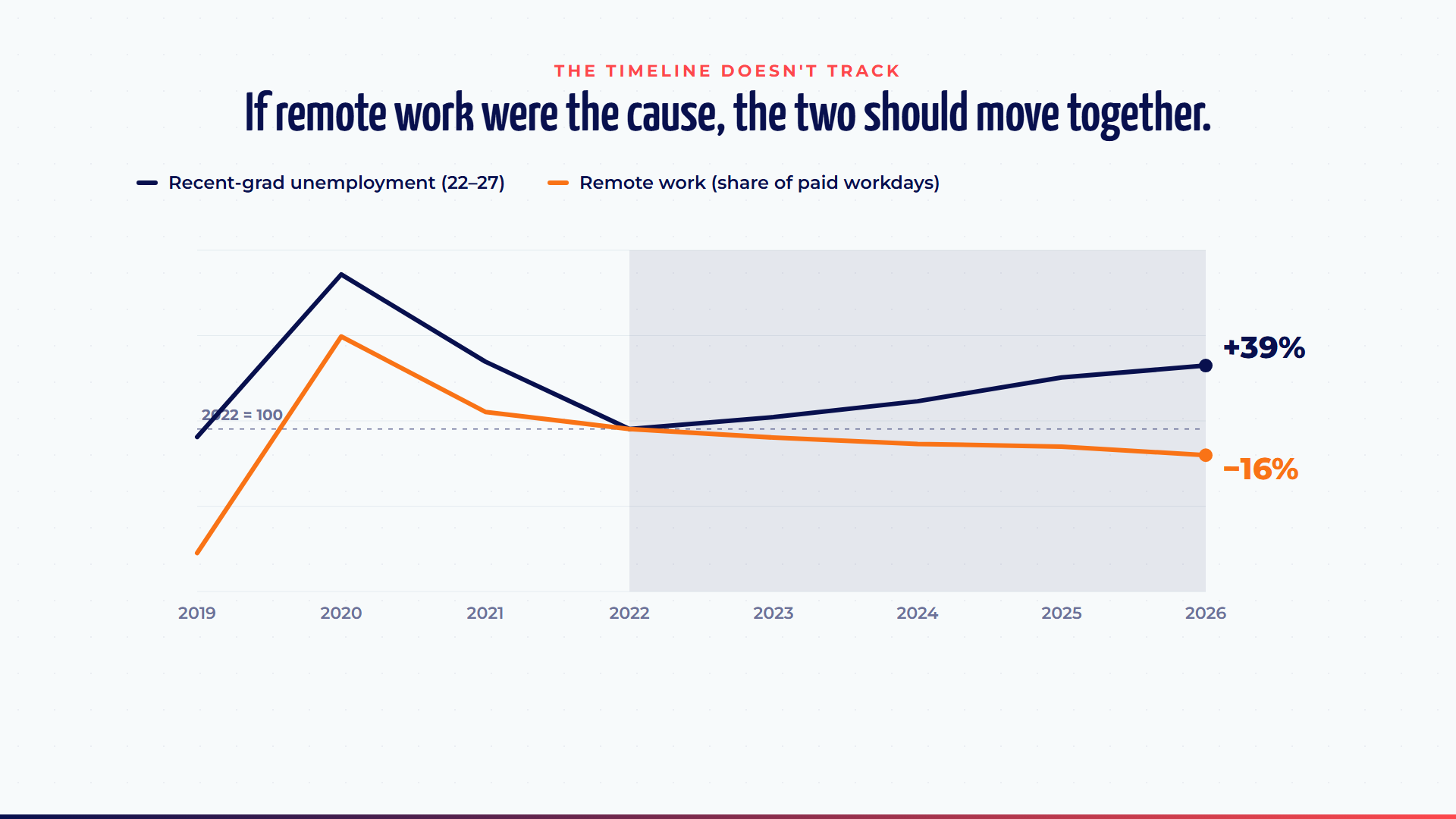
The 64 percent is a preliminary estimate from a working paper that hasn't been through peer review yet. The researchers describe it themselves as "back-of-the-envelope." That doesn't make the research wrong. The problem it points at is real. Unemployment among recent grads climbed from 3.6 percent before the pandemic to 5.6 percent this spring. Something changed. The question is what caused it.

The study doesn't actually measure who works from home. It sorts occupations by whether the work could, in theory, be done remotely. Engineers who were marched back to the office five days a week still count as "remotable." The category is much larger than the behavior. Remote work surged in 2020, then leveled off while grad unemployment kept rising. The thing being blamed stabilized while the problem it supposedly caused kept growing. That is a strange way for a cause to behave.

Then there's AI. The jobs labeled "remotable" are nearly the same jobs most exposed to generative AI, a rank correlation of 0.77 across occupations. The two variables move nearly in lockstep. "Remote work, not AI" and "AI, not remote work" leave the same fingerprint in the data. Stanford research finds workers aged 22 to 25 in the most AI-exposed occupations saw a 13 percent relative employment decline since generative AI spread. Big tech quietly gutted the entry-level door around the same time: by 2024, new grads were down to 7 percent of Big Tech hires. The door didn't close because people went home. It closed because companies decided to stop opening it.

The policy implication floating through the coverage was clear: end remote work. But researchers at the University of Pittsburgh tracked 54 major tech and finance firms that ran return-to-office mandates. Time-to-fill rose 23 percent afterward. Hire rates fell 17 percent. The companies that ran the implied experiment got slower at hiring, not faster.

Knowledge work does have a problem, and it's falling hardest on people just starting out. The honest read is just different from the headline. What develops a young worker has nothing to do with the commute. It comes down to whether someone owns your first 90 days. Whether you have a real mentor or just a Slack channel. Whether the team writes down how the work actually gets done.

When people feel isolated, that's usually a design problem. You don't fix a design problem with a commute.

Remote work is the simplest story we could tell about knowledge work. The simplest story is rarely the right one.

The full breakdown, including the AI entanglement problem, the mentorship evidence, and what to ask before accepting any role, is on the site.

🎯 WORTH YOUR TIME

Who Works from Home? Remote Work, Gender Equity, and the Access Gap — National Partnership for Women & Families

New analysis of 36 million U.S. teleworkers shows remote work is actively keeping women in the workforce — reducing hiring discrimination and supporting caregivers who couldn't otherwise stay employed. Before drawing conclusions about remote work's costs, it helps to know who can least afford to lose it.

5 Jobs Worth Applying To

1

Trail of Bits logo Technical Chief of StaffTrail of Bits

Remote

USA

$175K - $250K

View →

2

Omada Health logo Senior Software Engineer, AI TransformationOmada Health

Remote

USA

$179K - $224K

View →

3

Customer.io logo Senior Manager, Data Science & AnalyticsCustomer.io

Remote

Americas

$170K - $200K

View →

4

Mercury logo Senior Risk Strategist, FraudMercury

Remote

USA / Canada

$201K - $251K

View →

5

Dropbox logo Account ExecutiveDropbox

Remote

USA

$147K - $198K

View →
Browse All Remote Jobs →

Company Spotlight

PostHog logo PostHog

Fully Remote

Product Analytics • 120 employees

REMOTE Score: 93

REMOTE


This week's essay argued that writing down how the work gets done matters more than where it happens. PostHog is what that looks like in practice. Founded in 2020 out of Y Combinator and now serving 70,000+ teams, it documents how it hires, how it decides, and how a new engineer is expected to ship in week one, all readable before you apply. With around 120 people across time zones, it can't onboard by osmosis, so it writes everything down. Every team even publishes its official verdict on whether pineapple belongs on pizza. The company mascot, naturally, is a hedgehog.


17 open positions

View Company →

Working remotely—but never alone,

Jim


600 1st Ave, Ste 330 PMB 92768, Seattle, WA 98104-2246

Unsubscribe · Preferences

"Work" is a Verb

Transform your remote team's culture with weekly, battle-tested strategies from today's most successful distributed companies. Join forward-thinking leaders getting exclusive case studies, leadership interviews, and first access to research that solves real remote work challenges.

Read more from "Work" is a Verb

Work is a Verb A newsletter by Nothing earned is lost. A recruiter told me last month she almost messaged a candidate to ask for a cleaner resume PDF. She didn’t, because she could tell the application came from an AI apply tool. The candidate stopped being a candidate. Now flip the camera. Somewhere, in a kitchen, refreshing LinkedIn for a notification that isn’t coming, sits the candidate. They paid for the tool that sent that application. They paid for the next forty it sent this week....

A Blue and Orange logo that says Remotivated

Work is a Verb A newsletter by What do you do when you've blown your annual budget by May? A quick note before we get into it. Work is a Verb isn't an AI newsletter, and it isn't going to be one. But every week, readers tell me some version of the same thing. They're worried. They've been laid off, or they're watching their team get smaller, or they're reading another headline about how the role they spent a decade building is going to be automated by Christmas. The fear is real, and the...

A candidate completes a paid interview for a remote job

Work is a Verb A newsletter by Most Interviews Measure Polish, Not Performance Long interview processes are exhausting. I’ve been on both sides of them, and I genuinely couldn’t tell you which is more stressful. As companies try to hire more for skill and make better judgment calls on motivation, communication, and working style, the instinct is usually the same: add more steps, more panels, more hoops to jump through. It feels rigorous. It also does not seem to work very well. Robert Half...